Structural Drying in Hawaiian Gardens, CA
Air movers, LGR dehumidifiers, and daily moisture mapping pull the water you cannot see out of walls, slabs, and floors, and prove it is gone, across Hawaiian Gardens.
(562) 600-7190Tap the 24/7 emergency dispatch line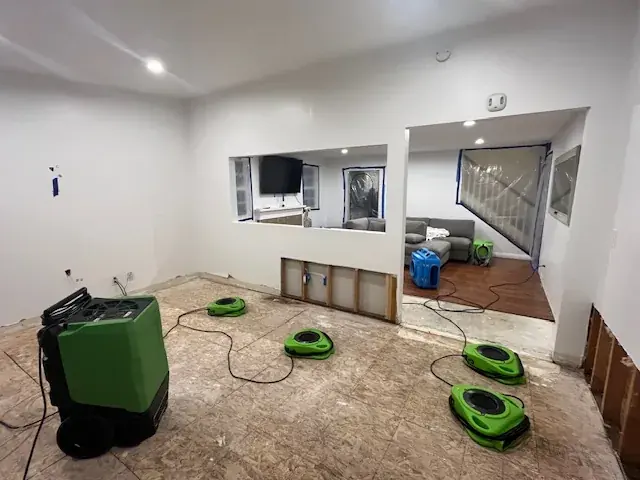
How structural drying is handled in Hawaiian Gardens
Call & dispatch
The response team answers 24/7 and the nearest Hawaiian Gardens crew heads out with truck-mounted extraction, air movers, and moisture meters.
On-site assessment
The crew finds the source and maps the full reach of the water, including what soaked into subfloor, slab, and wall cavities.
Extract & dry
The extraction crew pulls the standing water, then runs air movers and LGR dehumidifiers to a verified dry standard, not just the surface.
Verify & document
Moisture readings are logged until the structure is dry, then the loss is documented with the photos and daily readings an adjuster needs to move a claim.
Getting the standing water out is only half of a water loss. The water you cannot see, soaked into drywall, wicked up studs, and trapped under a slab, is what grows mold and warps floors. Structural drying pulls that hidden moisture out of your Hawaiian Gardens home and proves it is gone with numbers, not a guess.
Why drying is its own science
Drying is not just running fans until things feel dry. The technicians read the psychrometry, how temperature, humidity, and materials interact, and build a drying system around it. The IICRC S500 drying standard is the playbook.
- Wet materials release moisture into the air, which has to be removed, not just circulated.
- Warm, moving air pulls water off surfaces faster than still air.
- The target is a documented dry reading for each material, not how it feels to the touch.
This is the phase that follows water extraction, and doing it right separates a clean recovery from a musty smell and mold weeks later.
The equipment the restoration crews use, and what each part does
A proper dry out is a system of matched equipment, sized to the loss, not a couple of box fans.
- High velocity air movers lift moisture off surfaces and keep the air moving.
- LGR, low grain refrigerant, dehumidifiers pull that moisture out of the air so it does not resettle.
- Moisture meters and thermal imaging map how far water traveled inside walls and under floors.
- Containment keeps us drying the damage, not the whole house, which shortens the job.
Local crews size the equipment to the loss, then adjust it daily as the readings fall.
Moisture mapping and daily monitoring
The water almost always spreads further than the wet spot you can see. Mapping it is how nothing gets missed.
- On day one the technicians meter every affected material and image the walls and floor for hidden moisture.
- Each day a technician returns, reads the levels, and repositions equipment as needed.
- The crews stop only when every material hits a verified dry reading, then hand you the numbers.
Drying to a standard is also the best defense against mold, because mold needs moisture to grow. The EPA notes that controlling moisture is the key to controlling mold, and if any has already taken hold the restoration crews bring in mold remediation.
Coastal humidity makes drying harder here
Hawaiian Gardens sits only a few miles from the coast at Seal Beach, and the marine layer keeps the air damp much of the year. That humidity works against a dry out, which is why household fans are not enough.
- Damp coastal air slows evaporation, so materials give up water more slowly.
- Older plaster walls and slab floors hold moisture longer than modern drywall.
- A slab left to dry on its own in this climate can grow mold within 24 to 48 hours.
The CDC guidance on mold and moisture explains why wet material has to reach a dry standard. You can get a rough read on your timeline with the drying time estimator, and local crews confirm it on-site.
Water pumped out but not sure it is really dry? Call now. A drying technician is on-site across Hawaiian Gardens with meters, not guesses.
☎ Call (562) 600-7190Dry to a number, not to the touch
The most common mistake the technicians see in Hawaiian Gardens is calling a room dry because it feels dry. In this coastal, humid pocket of Los Angeles County, moisture hides in the wall cavity, under the slab, and inside the subfloor, and shows up weeks later as a musty smell or a stain. The crews dry to a documented reading and prove it, which keeps mold from taking hold. When water has stained a ceiling from above, the same mapping finds how far it spread through the framing.
Why Hawaiian Gardens calls the local pros first
Rapid local response
The response team answers 24/7 and the nearest crew heads out the moment you call, across Hawaiian Gardens and the Gateway Cities.
IICRC S500 drying standard
Trained crews with truck-mounted extraction, air movers, and moisture meters dry to a verified standard, not a mop and a fan.
Claim-ready documentation
The loss is documented with photos and daily moisture readings, the paperwork an adjuster needs to move a claim.
Local water experts
Slab leaks, coastal humidity, and storm season: the local pros know how water moves in these post-war Gateway Cities homes.
Serving Hawaiian Gardens and the Gateway Cities
Hawaiian Gardens water damage pros cover the Gateway Cities and the north Orange County line, day or night, with rapid local response.
Hawaiian Gardens water damage pros cover the Gateway Cities and the north Orange County line, day or night, with rapid local response.
Coverage runs across Hawaiian Gardens, Lakewood, Cerritos, Artesia, Cypress, Los Alamitos, Long Beach, Buena Park, Paramount, and Rossmoor, and nearby.
See every neighborhood and ZIP covered ›Related restoration services
Common questions, answered
How long does structural drying take?
Most residential dry outs run three to five days. The coastal humidity can slow things down, and a saturated slab or plaster wall holds water longer, so some jobs take more time. The restoration crews monitor daily and stop only when the readings hit a dry standard.
Can I just run fans and a box dehumidifier?
That dries the surface while the cavity behind the drywall stays wet, which is the mistake that leads to mold weeks later. Box fans move surface air only. They cannot pull water out of a wall, from under a slab, or out of framing, so trapped moisture stays put.
How do you know when it is really dry?
Local crews take moisture readings on the affected materials with meters and imaging, then track them daily against a documented dry standard for that material. When every reading is back to normal, the structure is verified dry, and you get the numbers for your records.
Do you dry inside walls without tearing them out?
Often yes. When the technicians catch a loss early, the crews can dry a wall cavity in place with targeted airflow instead of removing the drywall. If the water was contaminated or sat too long, some material has to come out, and the restoration crews tell you which and why.
Does drying really prevent mold?
It is the single most important step. Mold needs moisture, so drying the structure to a verified standard within the first day or two removes what mold needs to grow. In the humid coastal climate that fast, complete dry out matters more than almost anything.
Do I have to run the machines myself?
No. Local crews place and set the equipment, and it runs continuously through the dry out. A technician returns each day to check the readings and adjust the setup. You just leave it running between visits.
Will insurance pay for the drying equipment?
Structural drying is a standard, covered part of most water damage claims. The technicians document the equipment, the daily readings, and the timeline so the drying phase is clearly recorded, and the crews can work directly with your adjuster on the scope.
What does the drying phase cost in Hawaiian Gardens?
It depends on the size of the loss and how many air movers and dehumidifiers the space needs for how many days. You can get a rough estimate from the drying time estimator, and the restoration crews confirm a figure on-site. Call (562) 600-7190 for a straight answer.
Hawaiian Gardens water damage pros are standing by
Water sitting means damage spreading. Call Advanced Construction and Restoration and a local crew heads out across the Gateway Cities, day or night.
(562) 600-7190Call now, a Hawaiian Gardens crew answers day or nightAdvanced Construction and Restoration
Hawaiian Gardens, CA
Serving the Gateway Cities
Call 24/7
(562) 600-7190Hours
Open 24 / 7 / 365